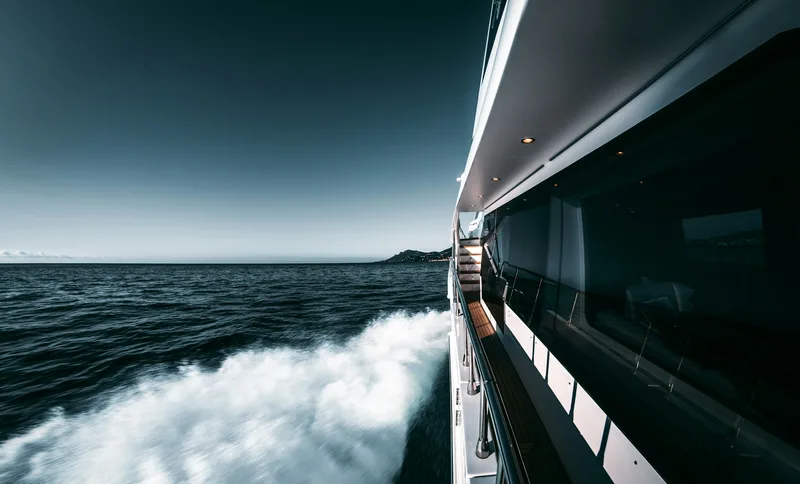
Yachts and marine
Salt, sun, vibration and tight spaces are hard on equipment. We choose and fit systems that can live on the water.
Why the sea is harder on equipment
A yacht is a hard place for electronics. Salt air reaches connections, sun bakes the deck, engines and waves shake every fixing, and the space behind a panel is measured in centimetres.
Equipment made for a villa often doesn’t last here, and it usually fails at a connection, not in the box.
This page explains what each condition does and how we plan for it. We cover sound, screens and control only. Navigation and safety systems stay with their specialists.

What salt does
Salt air is damp, conductive and everywhere. It attacks a connection long before the equipment gives up.
Corrosion at the terminal
Salt attacks bare copper and plated terminals, raising resistance until a channel fades or drops out.
Tinned cable
Tinned copper resists corrosion along its whole length, which matters wherever damp gets into a run.
Sealed joins
Joins are crimped, sealed with adhesive heat-shrink and kept high, so moisture has no easy way in.
Fixings that don’t stain
Marine-grade stainless fixings and the right sealants prevent rust streaks and leaks through the deck.

What sun does on deck
Decks take sun, spray and heat all day. Plastics chalk, colours fade and electronics cook.
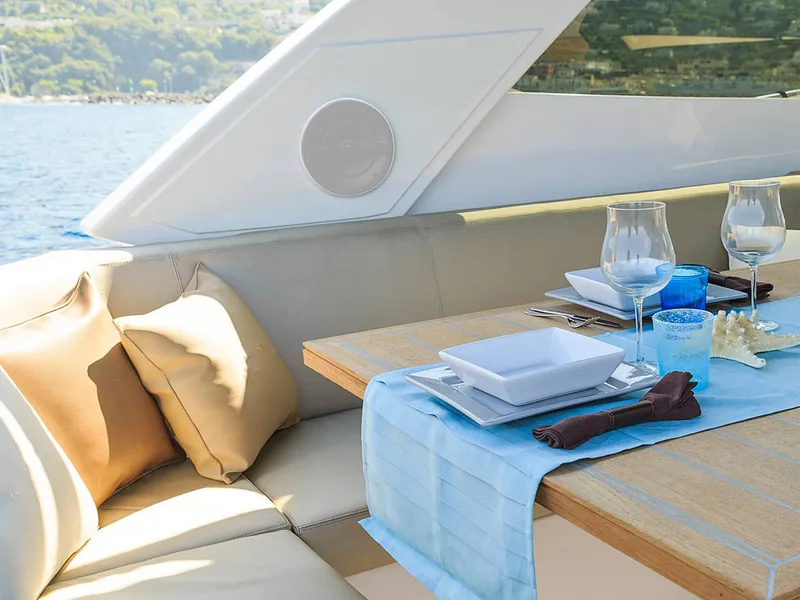
Speakers made for it
Marine-rated speakers use UV-stable grilles and moisture-resistant cones, so they hold up under direct sun.
Amplifiers below deck
Amplifiers stay in a ventilated locker below, with only speaker cable running up to the heat.
Screens you can read
A deck TV needs a bright, weatherproof panel and a shaded position, or a lift to stow it.
Considerate at anchor
Several low-level speakers near the seating fill the deck without carrying to the next boat.
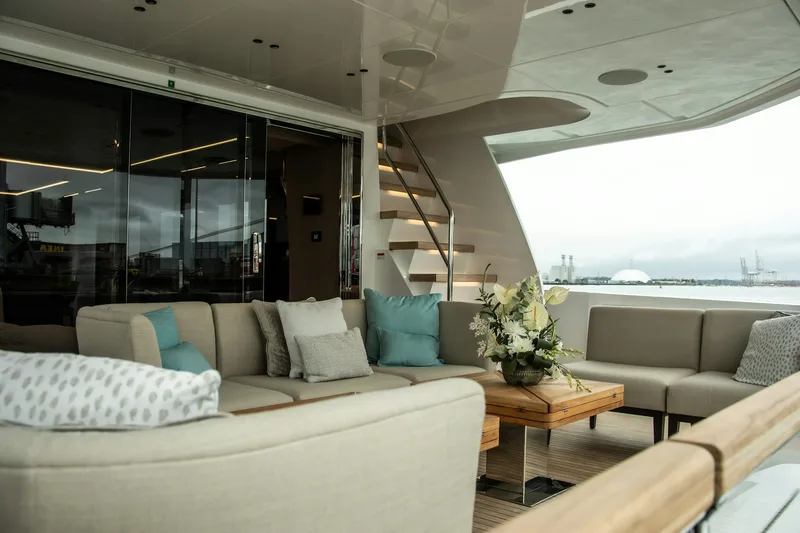
What vibration does in the salon
Engines, generators and a head sea shake everything. What sits still in a villa works loose here.
Mounts that stay put
Screens and racks fix to structure with locking fixings, and TV lifts stay braced when stowed.
Cables with support
Runs are clipped and strain-relieved, so movement doesn’t tire a conductor or pull a connector loose.
Nothing that spins
Solid-state storage and streamers replace disc players and spinning drives, which suffer first under shaking.
Bass that stays in the music
Subwoofers are isolated from the structure, so low notes don’t rattle panels or reach the cabins.
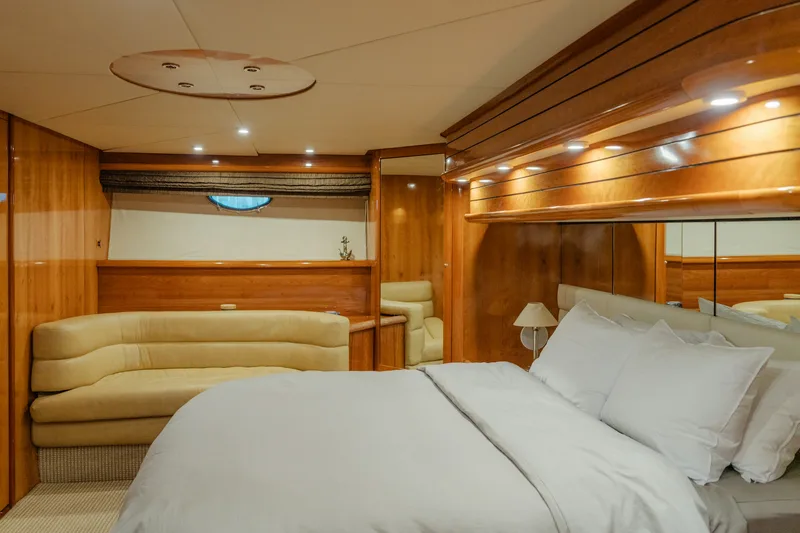
What tight spaces do in cabins
Equipment has to fit the depth, shed its heat and keep its sound inside one cabin.
Slim speakers
Low-profile speakers fit the little depth behind a cabin headliner, where most household models won’t go.
Heat in a locker
Equipment in a closed locker needs a route for air, because a small space warms quickly.
One guest’s film
Thin bulkheads carry sound. Speaker positions and level limits keep a late film out of the next cabin.
Power at anchor
Efficient amplifiers ease the load on batteries and generators, which matters on a quiet night at anchor.
Outdoor and marine-rated speakers
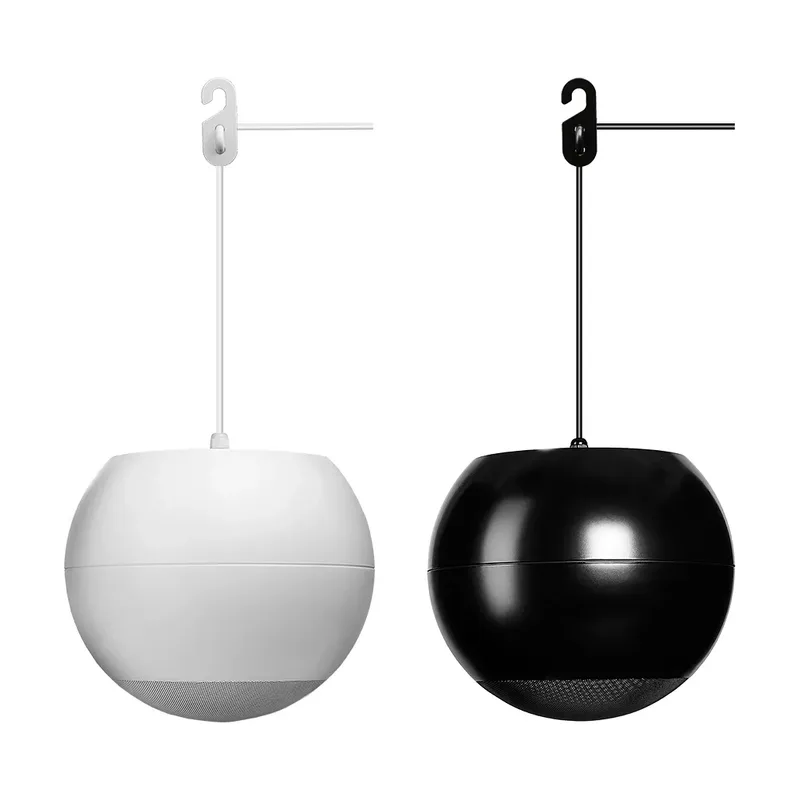 OSDNero Sphere 6.5" Hanging Pendant SpeakerPrice on request
 NewFocalOD Stone 8 BasaltePrice on request
 NewBowers & WilkinsMarine 6 WhitePrice on request
 OSDNero ARC 8" 2 Way Coaxial Pendant Style SpeakerPrice on request
 NewFocalOD Sat 5 BlackPrice on request
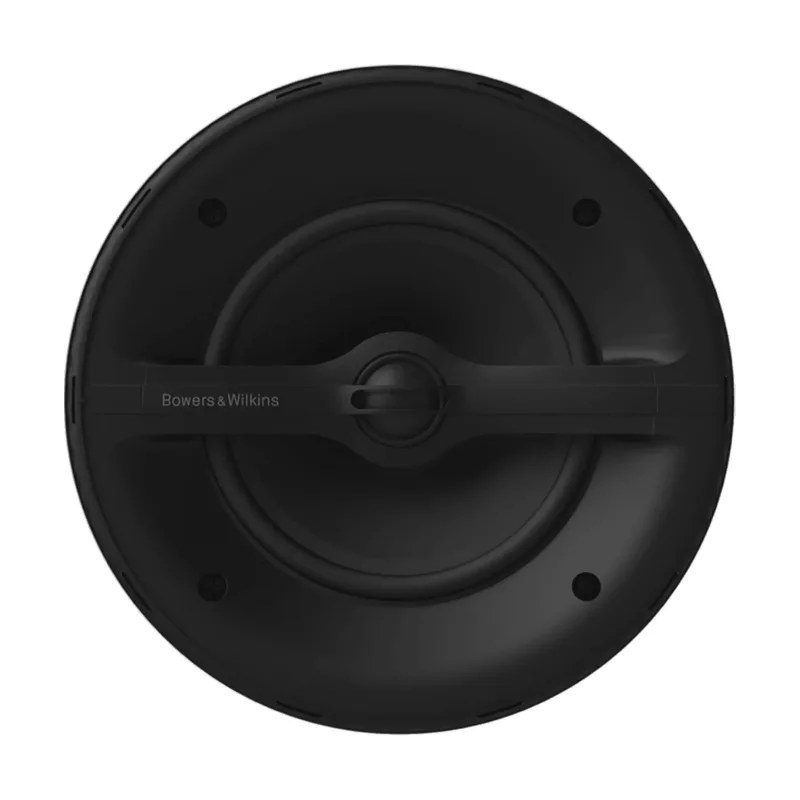 NewBowers & WilkinsMarine 6 BlackPrice on request
New build or refit: what changes
A new build can plan around the system. A refit works around what’s there.
New build: routes and weights
We agree cable routes, rack space, weights and power loads with the yard while joinery is on paper.
Refit: survey what’s there
We go aboard, test the old cabling and decide what can stay before anything comes out.
Refit: reuse the routes
Lifting headliners is costly. We reuse existing routes where we can, and go wireless where we can’t.
Refit: the yard window
Time out of the water is short, so equipment is ordered, bench-tested and labelled beforehand.
Either way: records and checks
Wiring diagrams stay on board, and a maintenance contract can book regular checks on connections and seals.
From first survey to sea trial
Aboard or on plan
We survey the vessel or its plans. You get a written scope, deck by deck.
Design for this vessel
You get layouts, an equipment schedule with weights and power draw, and a quotation.
Build and test ashore
Racks are built and tested on the bench, so time on board goes on fitting.
Test with engines running
We set levels with engines and generators on, because that’s how it gets used.
Hand over to the crew
Owner and crew get a walkthrough. Documents and a spares list stay on board.
Questions from owners and captains
Can you work with our yard?
Yes. We coordinate with your yard, captain or project manager, around haul-out dates.
Do you work on navigation or safety systems?
No. Those stay with their specialists, and we keep our work clear of them.
Can we use household speakers on a covered deck?
We advise against it. Salt air and humidity still reach a covered deck.
Can the crew run it without calling you?
That’s how we set it up: music, screens and lighting on one app or keypad.
Will films play offshore?
Streaming depends on your connection at sea, so we add a local library.
Tell us about the vessel
Send us general arrangement plans, the vessel’s length and year, where she’s berthed in the UAE and any yard dates. For a refit, add what’s on board and what’s failing.