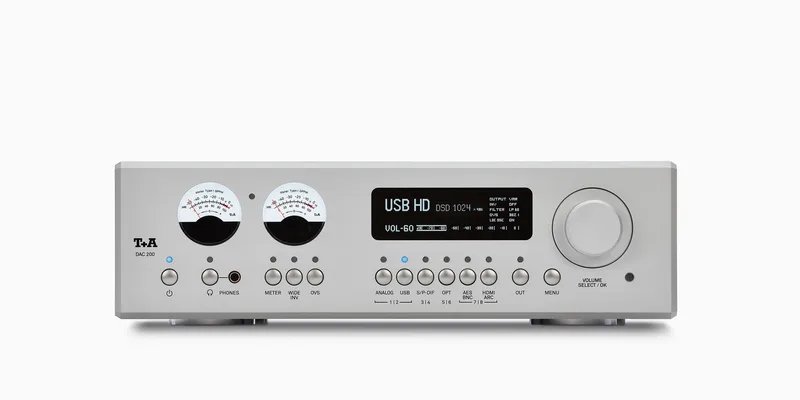
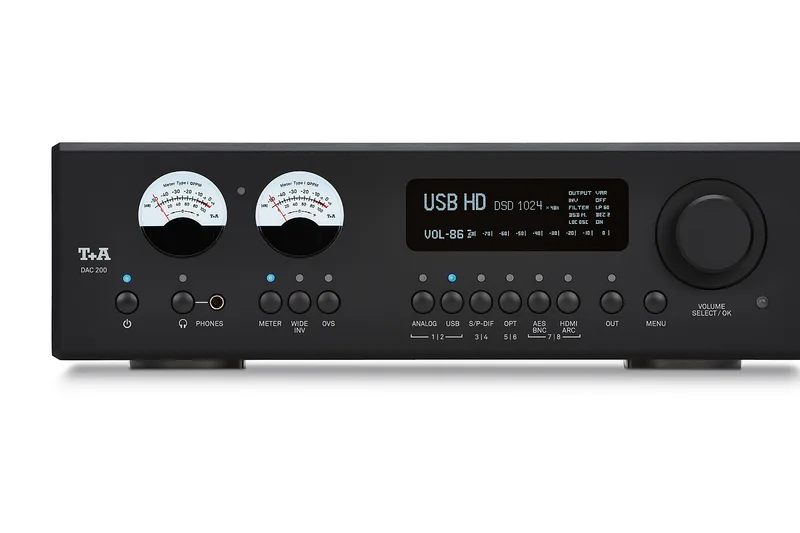
The DAC 200 is the latest member of an extended family of High-End converters and pre-amplifiers. Every aspect of its design symbolises our uncompromising commitment to science and music.
Read moreAt a glance
All specifications- Signal / noise ratio
- 110/114 dB
- THD / Intermodulation
- < 0,001 % / < 0,001 %
- Channel separation
- > 108 dB
- Standby
- < 0,5 Watts
- Weight
- 6,2 kg, 13.7 lbs
Overview
The DAC 200 is the latest member of an extended family of High-End converters and pre-amplifiers. Every aspect of its design symbolises our uncompromising commitment to science and music. The ability to reproduce DSD 1024 files and its complete galvanic separation are just two highlights which underline the potential of the DAC 200 in impressive style. The DAC 200 is designed to convert a large number of digital formats into natural-sounding analogue signals, and to pass them on via the integral headphone or analogue outputs.
In the box
- Remote control FM200
- power cord
- USB cable
About T+A
Ever since 1978 our driving force has been curiosity. Our aim was to define the framework of the possible, and push its limits a little further each day, and that’s what formed the stone of this company. We always aspired to the creation of new findings rather than the exploitation of existing knowledge. We were determined to carve out our own advances, and not simply follow the progress of technology. Satisfying this goal requires our team of fifteen designers and developers to create every device in our headquarters in Herford. From the initial design, developing every single circuit board and finishing with the software code - the stage which brings all the component parts together to form a grand ensemble - our devices are built in Herford. They are permeated by the belief on which this company was founded, and which drives all of us forward every day. We don't build mass products, we build accoustic treasures, we build heartbeats, goosebumps and enthusiasm.
All T+A productsFeatures
5
De-Jitter Masterclock
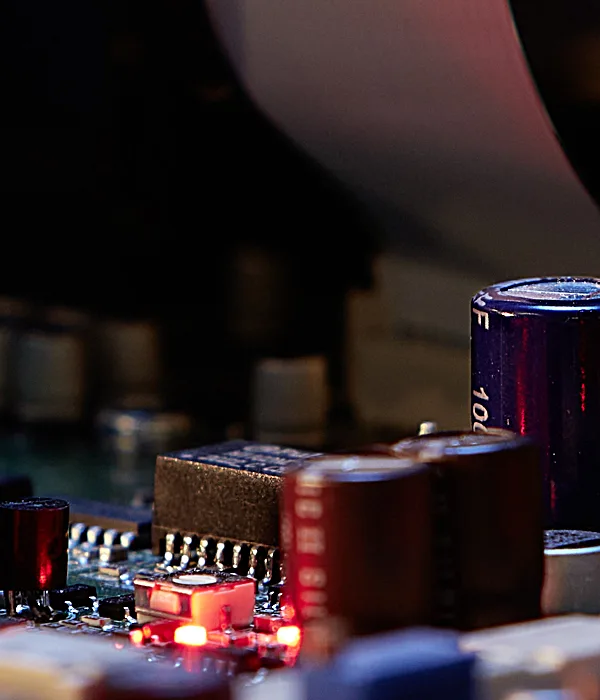
Our belief in totally pure music required an enormous effort on our part to eliminate the most minuscule of interfering influences. The T+A De-Jitter Masterclock was developed with the goal of freeing all T+A DACs from such interference signals, and in particular those which result from the use of computers. This type of interference - known as jitter - is caused by minimal timing errors, which still manage to exert a harmful influence on the sound experience unless they are removed before the conversion into analogue signals. The De-Jitter Masterclock was developed here in Herford, and constitutes a consistent audiophile response to jitter: in a multi-stage process the incoming signals are examined, and even the largest of jitter artefacts are removed. In the first stage the incoming signal delivers a raw clock pulse which is analysed very closely by micro-processors: the signal is then switched to the Masterclock - but only if its frequency and stability fulfil strict minimum criteria. If those criteria are not met, the signals are cleaned again through a further PLL stage in a specially constructed second jitterbug; this process reduces the residual jitter by a factor of 4. Signals which fulfil the purity requirements are de-coupled completely from the input jitter by switching to the Masterclock. The incoming signals are further processed by precision oscillators with the best available femto-clock accuracy. Each oscillator is reserved for a single clock family; the Masterclock covers both the odd 44.1 kHz to 705,6 kHz clock as well as the even 48 kHz to 768 kHz clock.
Path Separation Technology
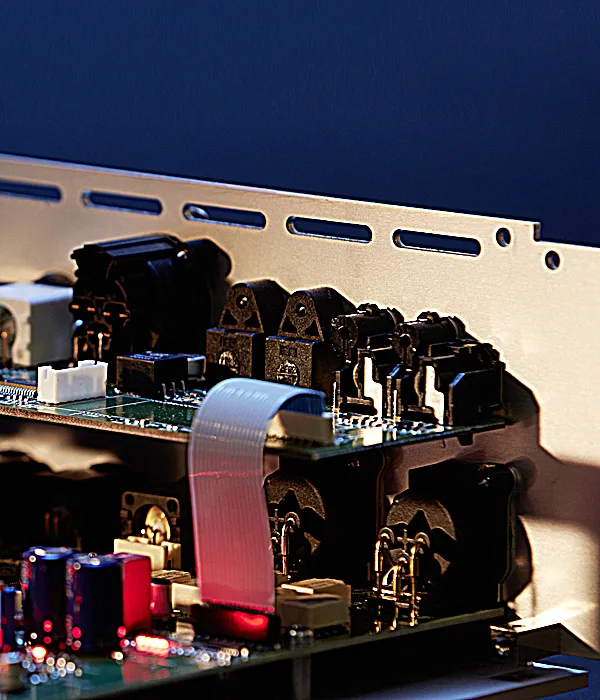
We believe in reproducing music in its purest form. And that is why we make every effort right at the development stage to eliminate even the most insignificant of interference factors, regardless of how minimal they are. Joint processing of PCM and DSD files in a single converter is just such a source of interference: supposedly insignificant, but in fact having a crucial influence on the sound. It was our insistence on eliminating this particular influence that caused us to develop the unique T+A Path Separation Technology: both PCM and DSD have their own converter, specifically tailored to their requirements. These converters exclude adverse sound influences as well as exploiting the potential of each format to the full. For PCM signals we use our quadruple converter, whereas DSD files are processed using the T+A True 1-bit converter, which is unique in the world.
Converters & Filters
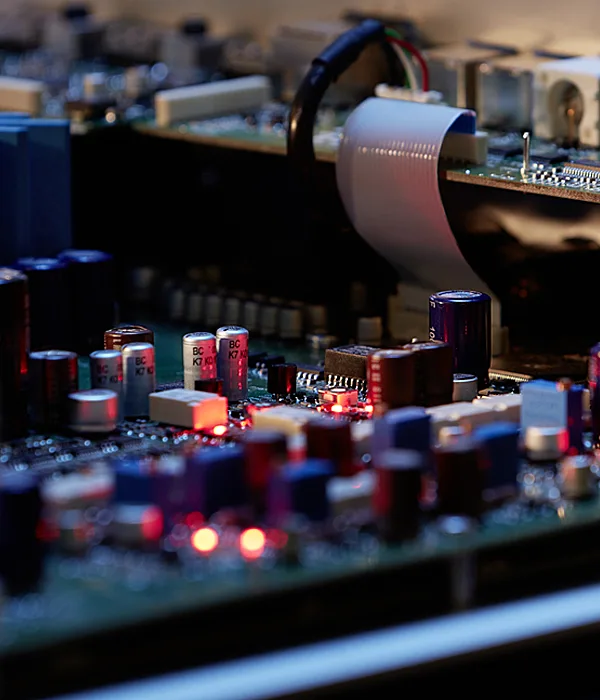
Our T+A True 1-bit converter is unique, as it forms a break with a paradigm: conventional converters process DSD signals by converting them into PCM, and reproducing them using the PCM mode. But this conversion contradicts our principles, and caused us to develop the True 1-bit converter, which processes DSD files in their native form, without detrimental conversion processes, and reproduces them in totally pure form as genuine 1 Bit Stream. Our PCM Quadruple Converter features a double symmetrical circuit design comprising the eight 32-bit Burr-Brown converters, thereby providing above-average compensation for non-linearities in the sound, and reduces the already minimal background noise by a further 6 dB. This sophistication results in amazing dynamism and linearity combined with an equally amazing freedom from distortion. Although we believe in unadulterated music reproduction, the Bezier filters - another in-house development - in the quadruple converter can be exploited by the listener to fine-tune the sound characteristics to his individual taste. The application of polynomials results in perfect timing behaviour for each of the six available filters, two of which are NOS stages.
Galvanic Separation DASS
The analogue sound quality is crucially determined by consistent separation between the digital and analogue sections. This separation, which we term the “Digital Analogue Separation System”, utilises ultra-fast digital isolators from Silicon Labs to provide galvanic separation between the analogue and digital sections. Since it is vital to maintain this separation through the entire signal chain, the mains sections for the analogue and digital signal paths are also completely separated galvanically.
Inputs, & Pre-amp & Outputs
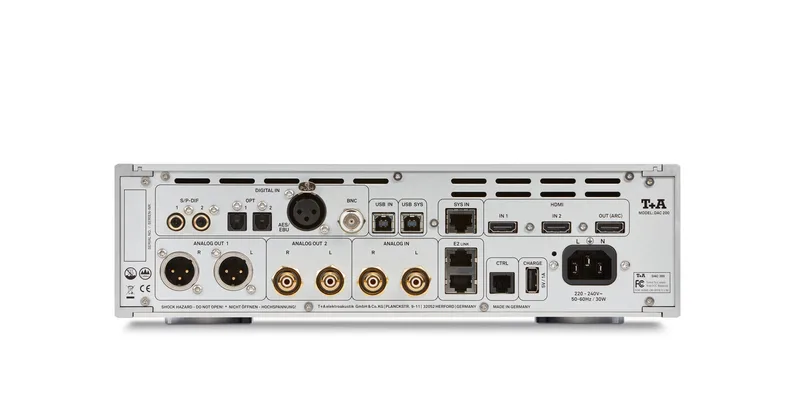
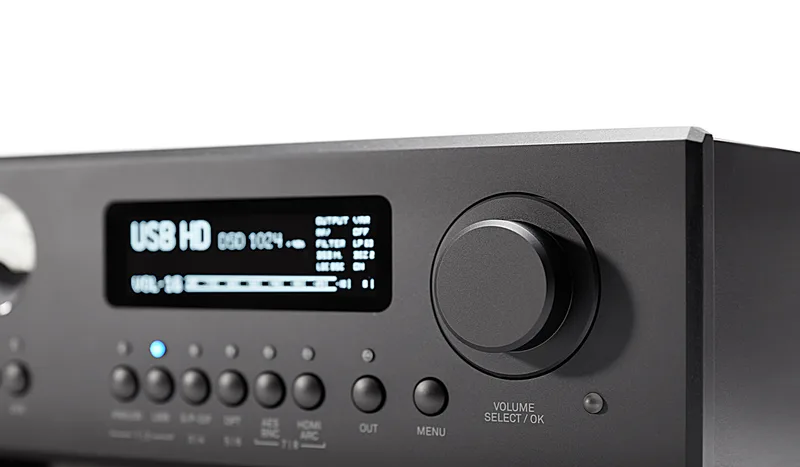
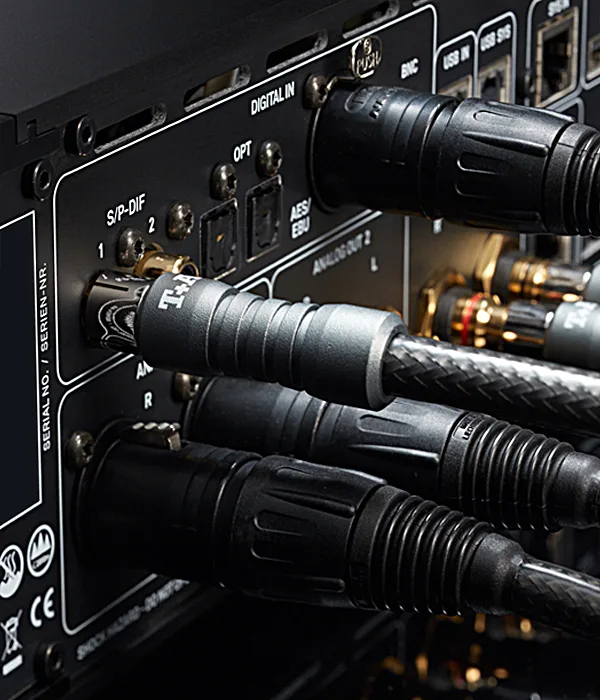
No restrictions of any kind - this maxim was our guide in determining the DAC 200’s connections: its inputs are as universal as they are high in quality: the USB-B inputs are based on the new high-resolution Thesycon chip, which processes signals up to DSD 1024. AES/EBU and BNC are also present, as is SP/DIF in optical and coaxial forms. The T+A SYS Link completes the high-speed signal connection within the Series 200 via the SYS IN input. One analog input is installed as standard, but two stereo HDMI inputs are available as an option. As a specialised pre-amplifier, the DAC 200 features a discreet Class A pre-amplifier section as well as double mono “State of the Art” outputstage, whilst also providing several outputs designed to cope with any requirement. Balanced XLR and unbalanced RCA outputs transfer the analogue signals to the output stages, while headphones are connected via a high-quality 4.4mm Pentaconn headphone output, which draws its signal from a special high-performance headphone amplifier. In contrast to conventional chip solutions, this is of fully discreet construction, and is specially designed for the requirements of headphones. An HDMI output with Audio Return Channel (ARC) for HDMI signal pass-through is available on the optional HDMI board.
Specifications
Analogue section
- Frequency response + 0 / − 3 dB
- 0,1 Hz – 200 kHz
- Signal / noise ratio
- 110/114 dB
- THD / Intermodulation
- < 0,001 % / < 0,001 %
- Channel separation
- > 108 dB
- Pre-amplifier outputs
- variable: High level (RCA) 0...2,5 Veff / 22 Ohms, balanced (XLR) 0...5,0 Veff / 22 Ohms fixed: High level (RCA) 2,5 Veff / 22 Ohms, balanced (XLR) 5,0 Veff / 22 Ohms discreetly designed Class A-HV-output stage in Double-Mono-Circuitry
- Volume control
- Gold contact relays controlled in 1 dB steps, - 90 dB to 0 dB
- Headphone output
- 4.4 mm Pentaconn, discreetly designed high performance output stage, Class A operation up to 200 mA, 6 Ohms output impedance
Analogue inputs
- High level (RCA)
- 250 mVeff ... 4,5 Veff / 10 kOhms
Digital inputs
- Digital inputs
- 1 x AES-EBU 32...192 kHz / 16-24 Bit S/P-DIF: 2 x Standard Coax, 2 x optical TOS-Link 32...192 kHz / 16-24 Bit and DoP DSD64 (0x05/0xFA Marker) 1 x BNC 32...192 kHz / 16-24 Bit 2 x USB DAC: Device-Mode 44,1 ... 768 kSps (PCM) and up to DSD1024*, supports asynchronous data transfer. *DSD 512 and DSD 1024 with Windows PC and appropriate driver installed or Linux PC with Kernel 4.4 or higher only. Supports DoP up to DSD 256 (0x05/0xFA Marker). 2 x HDMI IN, 1 x HDMI OUT with ARC (as an option)
D/A converter section
- PCM
- Double-Differential-Quadruple-Converter with four 32-Bit Sigma-Delta D/A converter per channel, 705,6 / 768 kSps conversion rate
- DSD
- T+A-True-1Bit DSD D/A converter, up to DSD 1024 (49,2 MHz), native bitstream
- Upsampling
- T+A signal-processor – synchronous upsampling with four selectable oversampling algorithms. FIR short, FIR long, Bezier/IIR, Bezier, NOS (non-oversampling)
- Analogue filter
- Phase-linear Bessel filter 3rd order, switchable with 60 or 120 kHz cut off frequency
Mains / Accessories / Dimensions
- Mains
- 200 – 240 V, 50 – 60 Hz, 30 Watts
- Standby
- < 0,5 Watts
- Dimensions (H × W× D)
- 10 × 32 × 34 cm, 4 x 12.6 x 13.4 inch
- Accessories
- Remote control FM200, power cord, USB cable
- Weight
- 6,2 kg, 13.7 lbs
- Finishes
- Alu silver anodized (43), Alu black anodized (42)
Downloads
3
- User manual DAC 200Manual · English · PDF, 1.1 MBDownload
- DAC 200 Installation manualManual · English · PDF, 1.1 MBDownload
- A 200 Catalogue Series 200Brochure · English · PDF, 2.5 MBDownload
Awards and press
15
 The Absolute Sound

The T+A DAC 200 is the heart of a Series 200 system. If you have other Series 200 components, the DAC 200 is an easy decision for any audiophile with the means.
Future Audiophile
It is quite hard to think how else T+A could have done any better here, this is such a strong performer, and the no-compromise quality is evident here.
Hifi and Music Source Fidelity
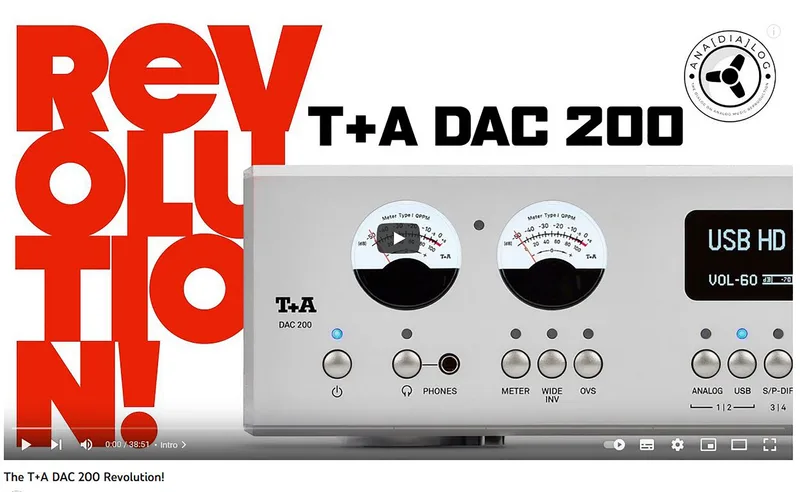
Digital to analog converters are in constant evolution. The new DAC 200 by the German audio brand T+A just started an audiophile revolution!
Anadialog hifi.nl

T+A has set the bar extremely high with the DAC 200. This DAC is one for the ages. It sounds fantastic, looks classic, functions seamlessly, is well supported, and is priced competitively.
Audiophile Style- Audio Poland
 Audio
 Hörerlebnis

Now a full quartet, T+A’s compact but beautifully formed Series 200 has expanded to include a media player, DAC/preamp and Purifi Eigentakt Class D stereo power amp.
Hifi News Image Hifi 3-4/2022
 LowBeats
 Stereo
 Stereoplay
More from T+A
 T+AMP 200 G3Price on request
 T+AG 2000 RPrice on request
 T+AMP 2000 R G3Price on request
 T+AMP 2500 R G3Price on request
 T+AMP 3100 HV G3Price on request
 T+APDT 3100 HVPrice on request
 NewT+APSD 3100 HVPrice on request
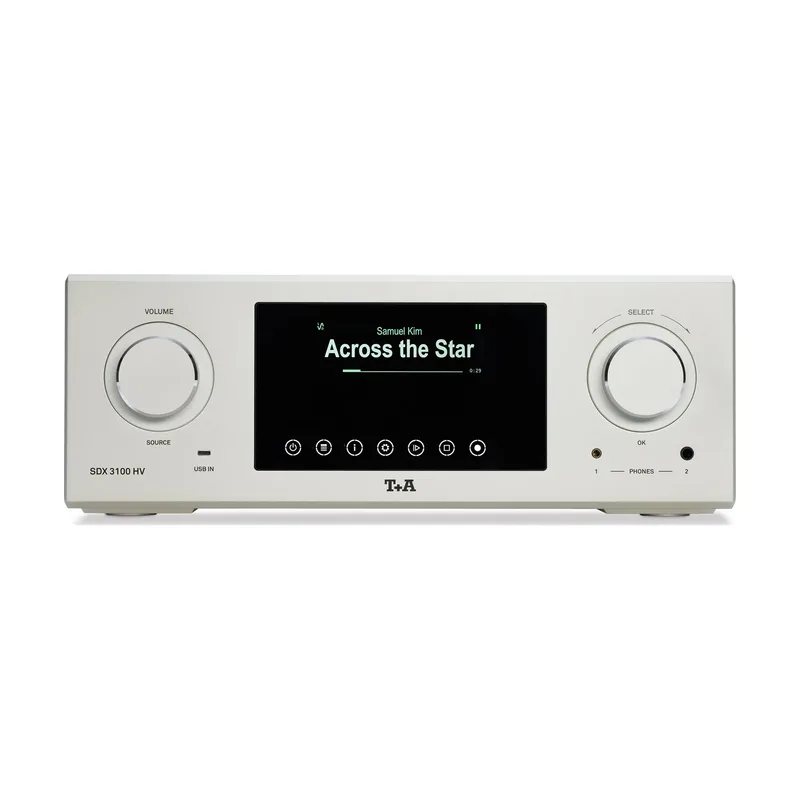 T+ASDX 3100 HVPrice on request
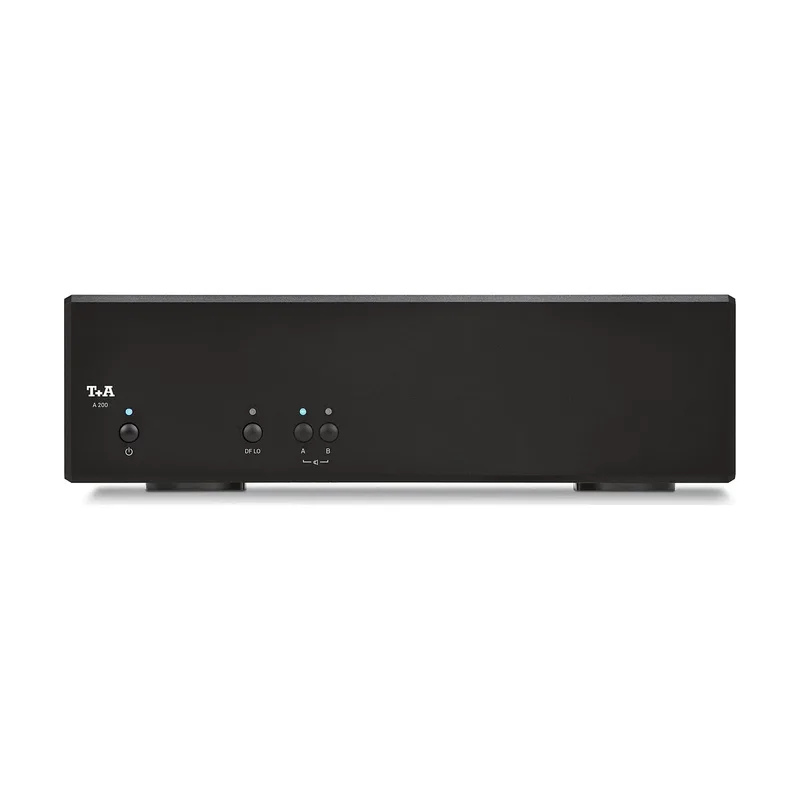 T+AA 200Price on request
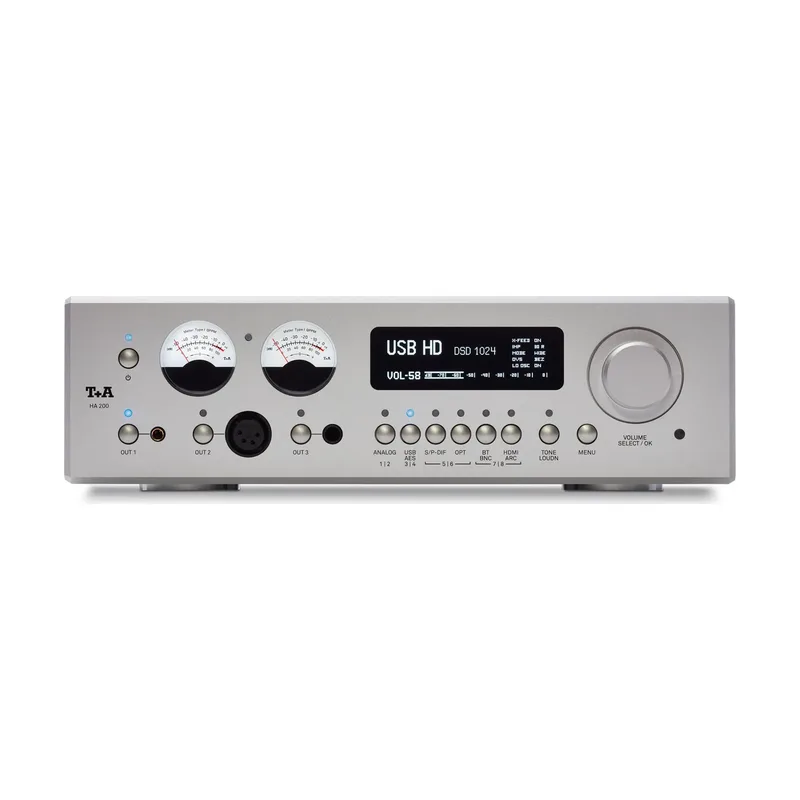 T+AHA 200Price on request
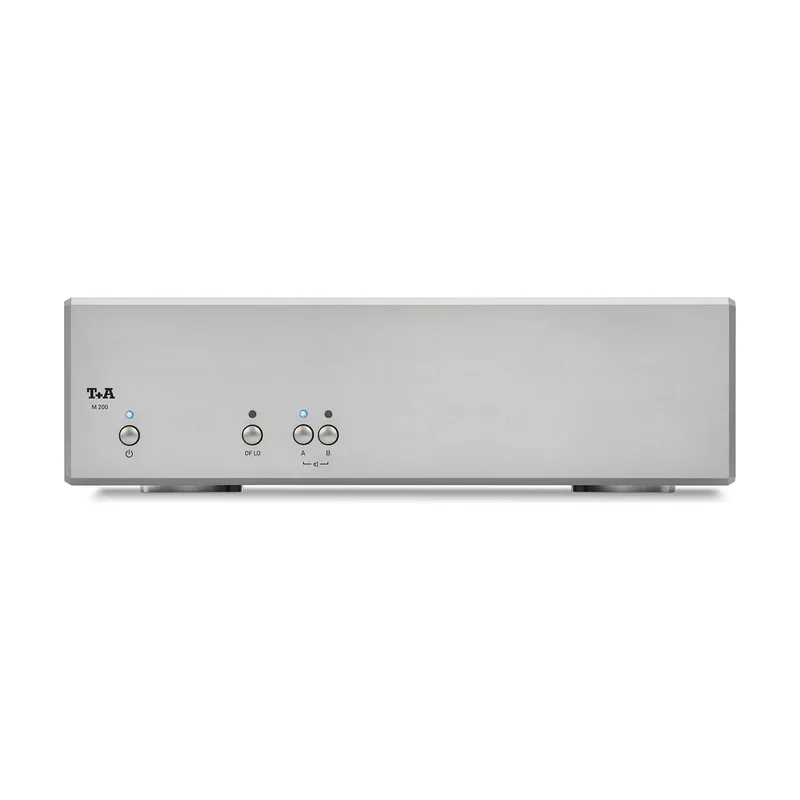 T+AM 200Price on request
 T+AA 3100 HVPrice on request
Similar products
 AtollDAC100 SignaturePrice on request
 AtollDAC200 SignaturePrice on request
 AtollDAC300Price on request
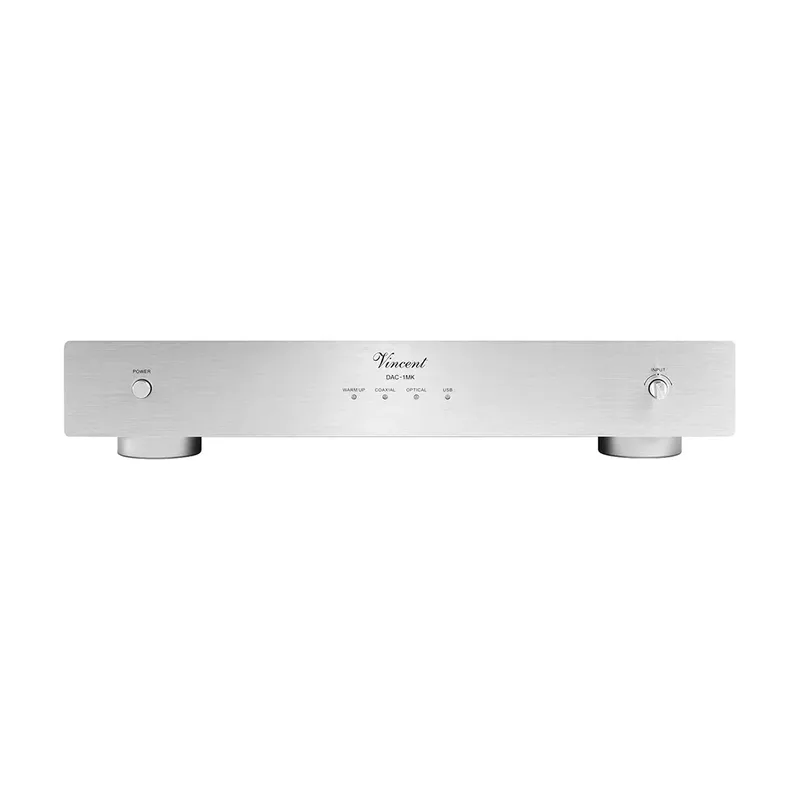 VincentDAC-1MKPrice on request
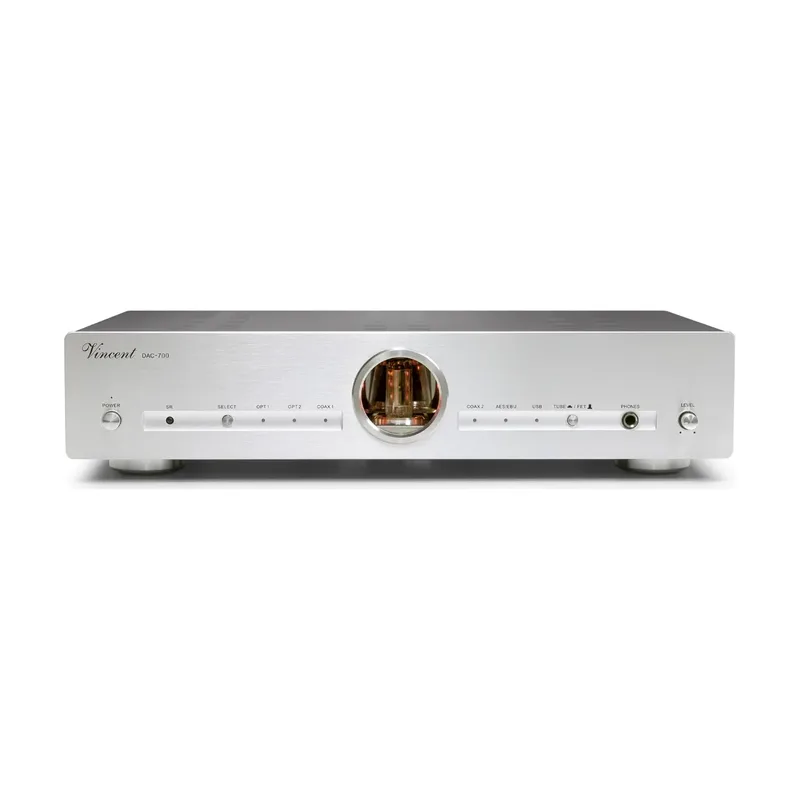 VincentDAC-700Price on request
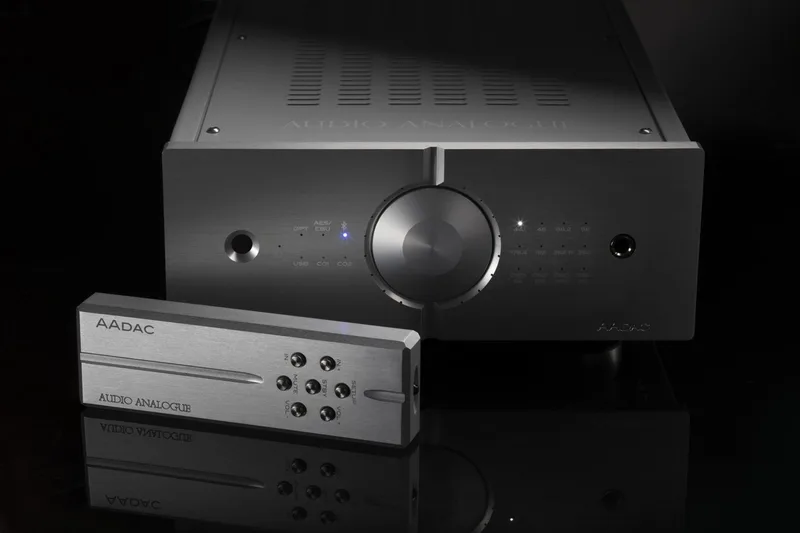 NewAudio AnalogueAAdacPrice on request
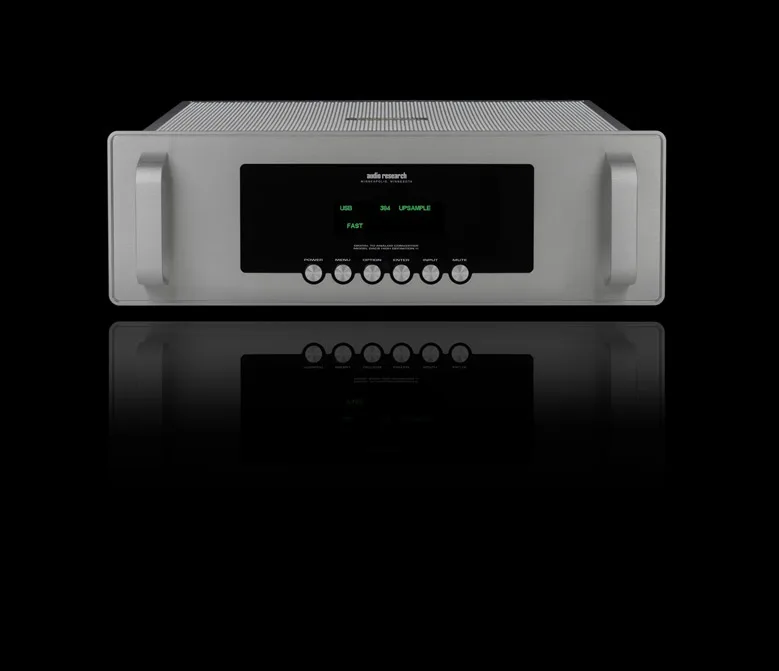 Audio ResearchDAC9Price on request
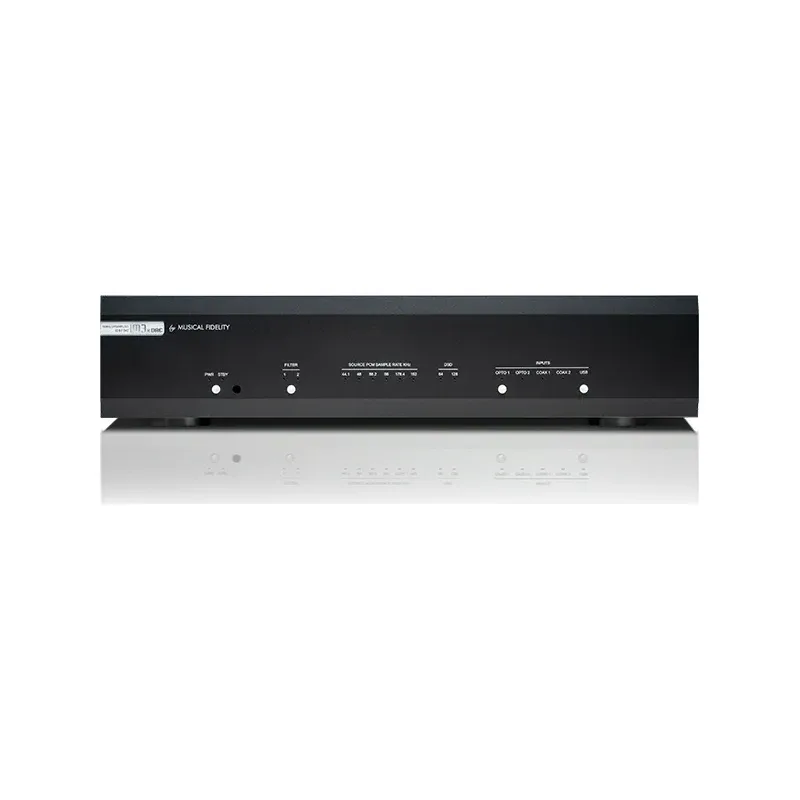 NewMusical FidelityM3x DACPrice on request
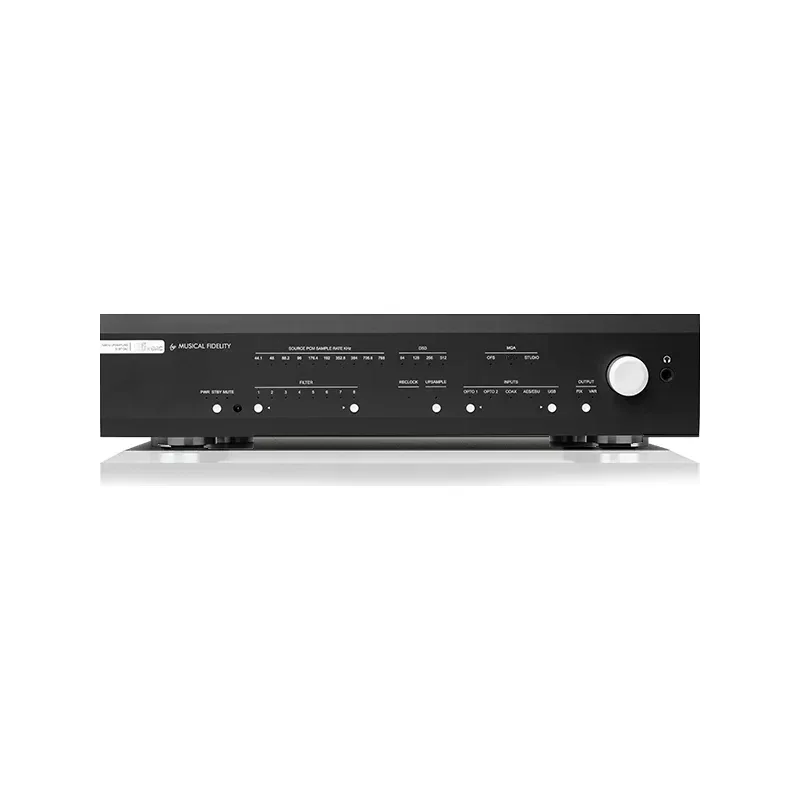 NewMusical FidelityM6x DACPrice on request
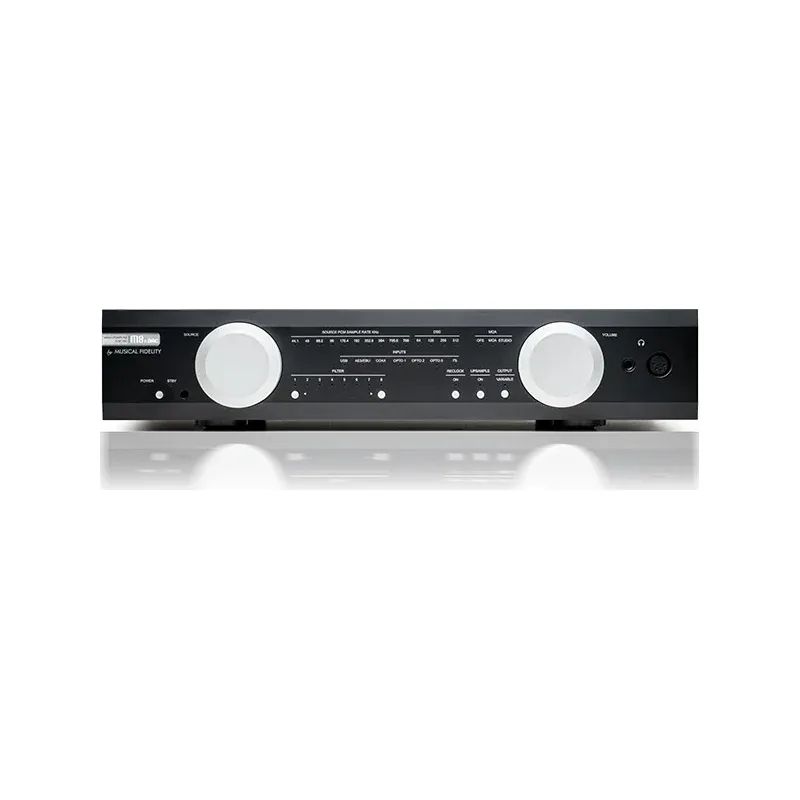 NewMusical FidelityM8x DACPrice on request
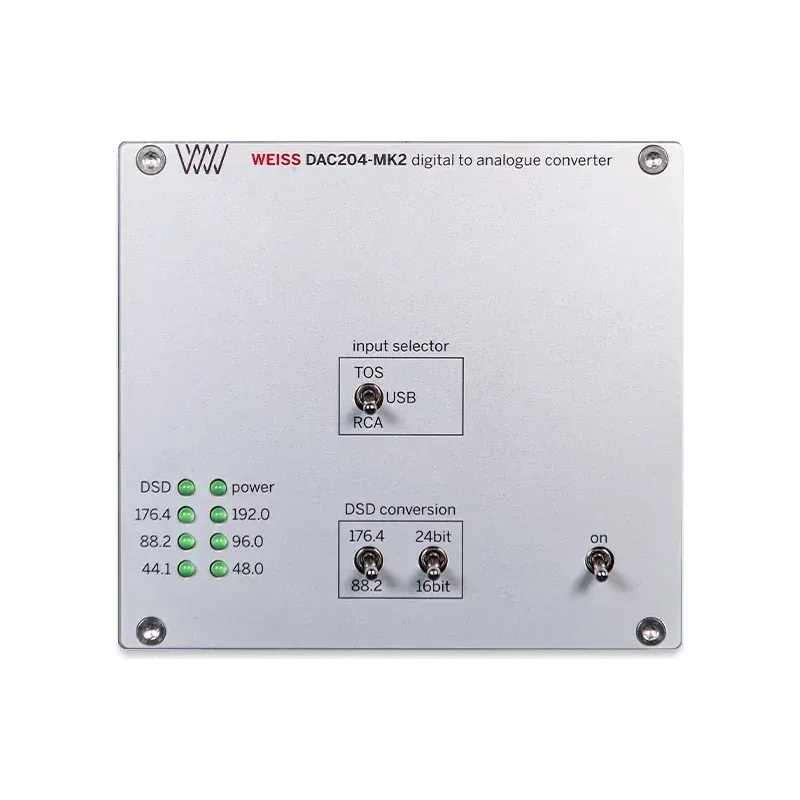 WeissDAC204-MK2Price on request
 NewWeissDAC205-MK2Price on request